


Peptides for BJJ and MMA Recovery: What Martial Artists Should Know
A martial artist’s perspective on recovery, the evidence behind popular peptides, and the competition rules every athlete should understand.
The recovery question worth asking
Can a treatment help you return to training safely? That answer starts with the injury, the human evidence and your competition rules. BPC-157, TB-500, sermorelin and ipamorelin should not be presented as proven recovery treatments for healthy martial artists.
You finish training feeling good. Then you wake up the next morning.
Your fingers are stiff. Your shoulder complains when you reach overhead. Walking downstairs reminds you of every takedown attempt from the night before.
Anyone who spends enough time on the mats recognizes that routine. Brazilian Jiu-Jitsu, MMA, wrestling and striking sports—including Muay Thai, kickboxing and boxing—place substantial demands on the body. For many practitioners, the challenge is finding a way to train consistently while managing everything that happens between sessions.
That helps explain the interest in peptides for recovery. But what can these compounds actually do? Which claims deserve attention, and which run ahead of the research? As martial artists and co-founders of NovaGenix, we believe our community deserves a thoughtful answer.
Our friendship began through Brazilian Jiu-Jitsu
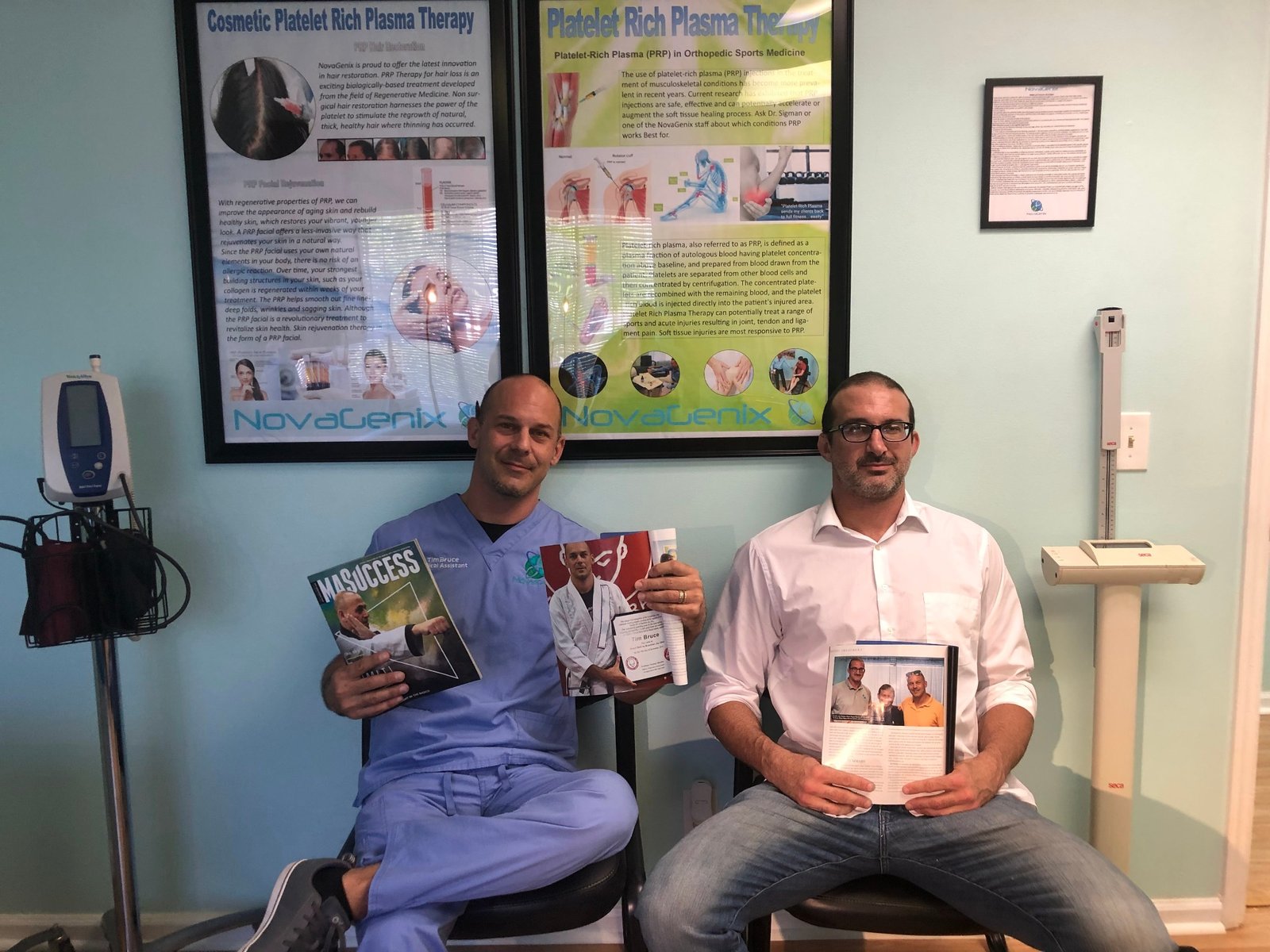
Tim began training BJJ in Delaware in 1998 and later became a black belt, instructor and competitor. Andy started training in Lexington, Kentucky, at Four Seasons MMA before moving to South Florida. After connecting about where to train, we became friends through the sport.
Those experiences eventually helped shape the idea for NovaGenix. Tim wrote about that journey in “New Treatment for Injured Martial Artists,” published by MA Success. That older article documents our history; it is not a description of today’s services or a current medical evidence review.
We understand why recovery matters to this community. Training is a social outlet, a competitive pursuit and, for many people, an important part of their identity. Missing weeks of it can be frustrating.
Mental toughness includes knowing when to recover
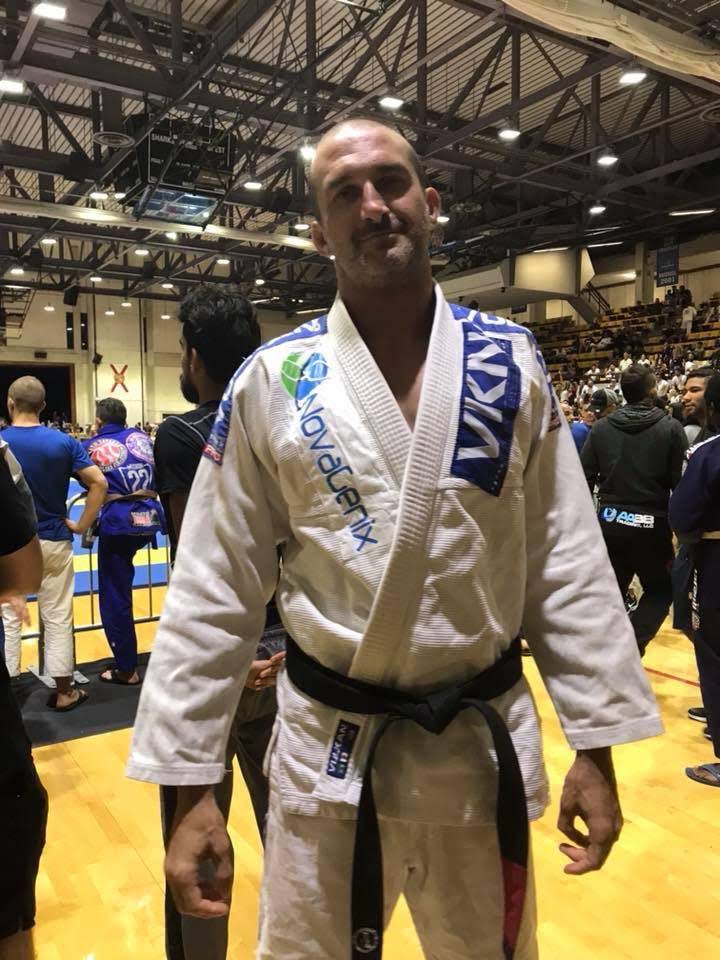
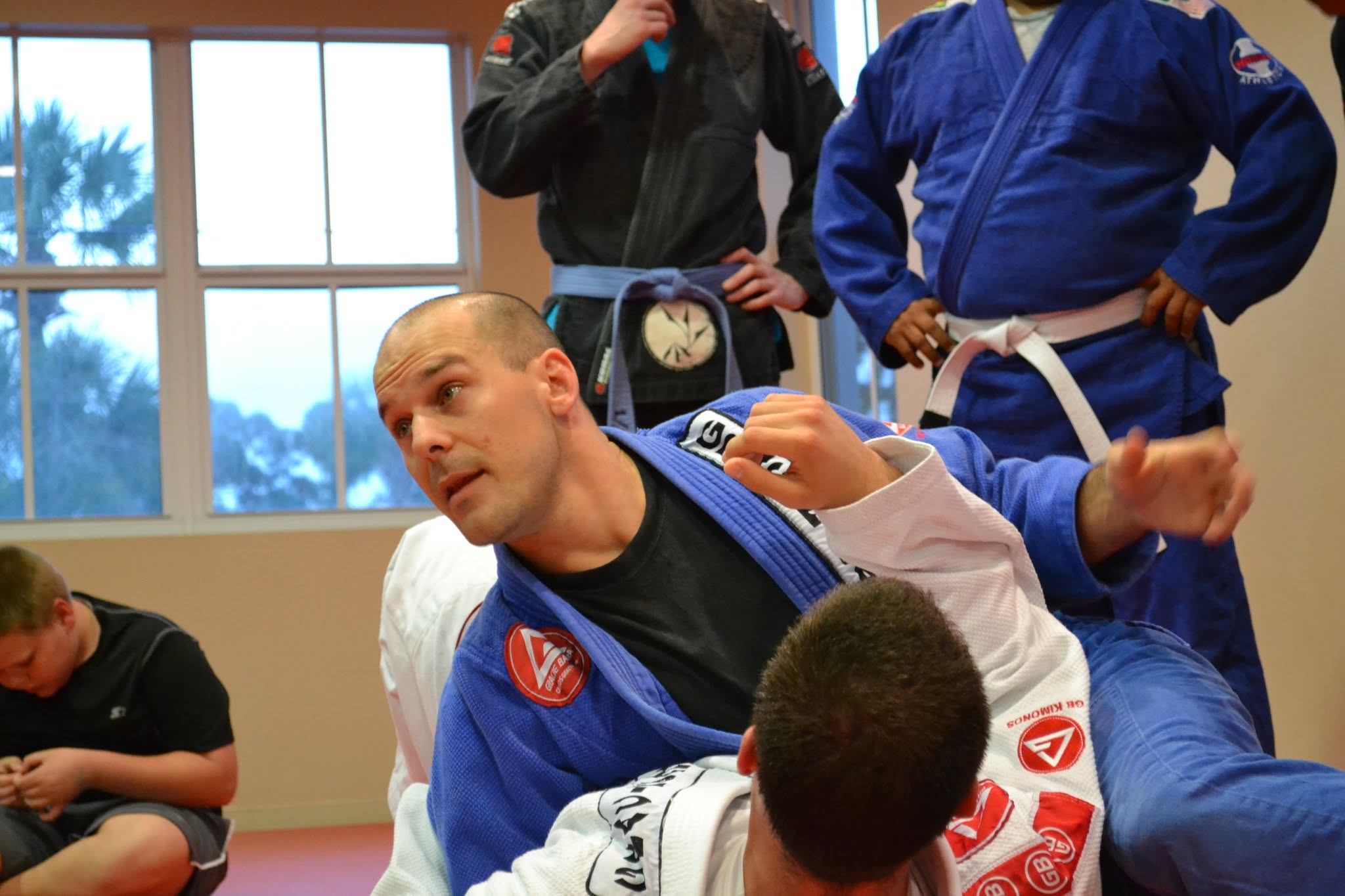
In “Mental Toughness in BJJ,” published by BJJ Weekly, Tim explored confidence, motivation, focus and handling adversity. Those qualities help people stay committed to a demanding sport. Recovery requires judgment, too.
It takes judgment to reduce training volume when something hurts, patience to follow rehabilitation exercises when you would rather roll, and confidence to sit out a round without feeling you have something to prove.
That is the perspective we bring to conversations about peptides. Any medical option should fit into a plan that helps an athlete make sound decisions about training and health.

Why are martial artists interested in peptides?
Peptides are chains of amino acids. Some act as signals in the body, and different compounds can have very different biological effects. Around gyms and academies, the conversation often centers on sore tendons, lingering injuries, sleep and recovering between demanding sessions.
The important distinction is between a biological mechanism and a demonstrated benefit. Influencing a tissue-repair pathway does not establish that a compound heals a grappler’s shoulder or shortens an MMA fighter’s return to competition. Laboratory and animal findings cannot automatically be applied to people.
Our peptide therapy guide explains why the specific compound, indication, evidence and regulatory status matter. Some peptide medicines have FDA-approved uses; that does not extend approval to every peptide or every recovery claim.
BPC-157
Much of the interest comes from preclinical tissue-repair research. Some users describe less tendon or joint discomfort and easier movement between workouts. These personal reports attract attention, but they do not establish that BPC-157 caused the improvement.
People may also be using rehabilitation, changing training loads or taking other compounds. Less pain does not necessarily mean a tendon, ligament or joint has healed or is ready for hard rounds.
BPC-157 is not FDA-approved. Human research remains limited, and strong clinical evidence for sports-injury recovery is lacking. FDA also identifies concerns about immune reactions, impurities and limited safety information.
Read the BPC-157 evidence and safety guide →TB-500 and the Wolverine Stack
You may hear training partners discuss TB-500 or a BPC-157/TB-500 combination called the “Wolverine Stack.” User accounts often describe less discomfort, better mobility or feeling more recovered. They cannot establish what each compound contributed.
Neither compound is FDA-approved. Combining them does not prove they work better together or are safe for an injured athlete. The nickname is memorable; it is not a recognized clinical protocol.
Research on full-length thymosin beta-4 should not be treated as proof that a commercial TB-500 fragment product produces the same results.
Explore the Wolverine Stack guide →Compare TB-500 and BPC-157 →
Sermorelin
Online reports often describe better sleep, more energy or less workout soreness. Sermorelin acts through the growth hormone–releasing hormone receptor, but that mechanism does not establish improved recovery in healthy martial artists.
There is no currently marketed FDA-approved sermorelin product in the United States. A compounded preparation is not an FDA-approved finished medication. A consultation should address the underlying concern, risks and alternatives.
Read the sermorelin overview →Ipamorelin
Ipamorelin stimulates growth hormone release through the ghrelin receptor. Many online recovery accounts involve CJC-1295 plus ipamorelin, making it difficult to attribute a reported effect to ipamorelin alone.
Ipamorelin is not FDA-approved for any indication. It should not be presented as a proven solution for healing training injuries, improving sleep or enhancing athletic recovery.
Read the ipamorelin overview →Compare sermorelin and ipamorelin →
Stories from training partners, professional fighters, podcasts and social media cannot establish safety, effectiveness or an appropriate return-to-sport timeline. Any improvement needs to be interpreted alongside rehabilitation, training changes and natural healing.

Tonya Reyes, NovaGenix’s Patient Coordinator and Office Manager, is an MMA fighter and Brazilian Jiu-Jitsu black belt who also teaches classes at Palm Beach Gardens Martial Arts in Lake Park, Florida.
The school is led by Igor Almeida and Natasha Quiza Almeida. Learn more about their backgrounds on the school’s instructors page.
Palm Beach Gardens Martial Arts
Address: 802 10th Street, Lake Park, FL 33403
Phone: 561-766-1371
Who can benefit from a recovery evaluation?
Consider the recreational grappler who works full time, sleeps poorly and trains five nights a week. Or the instructor who teaches multiple classes, demonstrates techniques all day and still wants competitive rounds at night.
An MMA fighter preparing for a bout may face a different mix of sparring, wrestling, conditioning, strength training and weight management. These athletes can share the concern “I’m not recovering well” while needing very different solutions.
A useful evaluation starts by identifying the problem. Is there an injury that needs diagnosis? Has training volume increased too quickly? Is the athlete eating enough? Is poor sleep affecting daily function? Does an existing condition need attention?
Peptide therapy may be a subject for discussion. Participation in a demanding sport alone does not establish a medical indication.
Competition rules belong in the conversation
The IBJJF anti-doping policy says it abides by the World Anti-Doping Code and WADA Prohibited List, although the federation is not a Code signatory. Other grappling organizations, MMA promotions and athletic commissions may use different policies.
Under the 2026 WADA Prohibited List
- BPC-157: prohibited at all times under S0, non-approved substances.
- TB-500: prohibited at all times under S2, growth factors and growth factor modulators.
- Sermorelin, ipamorelin and CJC-1295: prohibited at all times under S2, growth hormone releasing factors.
A prescription or an injury does not automatically create permission to use a prohibited substance. Check the official WADA list effective on your competition date and any applicable therapeutic use exemption requirements before treatment.
Where to check your sport’s rules
Brazilian Jiu-Jitsu
IBJJF anti-doping policy
Confirm your specific tournament’s requirements. Other grappling events may differ.
MMA • UFC
UFC Anti-Doping Program
Check UFC documents and exemptions. These rules do not govern every MMA promotion.
Muay Thai • IFMA
IFMA anti-doping guidance
Check national federation and event requirements as well.
Kickboxing • WAKO
WAKO rules and reports
Review prohibited substances, athlete duties and exemption procedures.
World Boxing
World Boxing anti-doping resources
Use guidance for competition under this organization.
USA Boxing
USA Boxing Rule Book
Confirm current national rules and applicable anti-doping obligations.
These resources apply to the named organizations. Professional fighters and boxers should also confirm their promotion, sanctioning body and athletic commission’s requirements. Tell your physician exactly where you compete.
Put the recovery foundations in place
Before buying into a recovery trend, look at the week surrounding your training. Does every class turn into a competition? Are you giving yourself enough opportunity to sleep? Have you followed through on rehabilitation for the injury that keeps returning?
Training load
Build room for lighter sessions and recovery instead of making every round a test.
Sleep
Protect consistent sleep time and discuss persistent sleep problems with a clinician.
Nutrition
Match food and fluid intake to training demands. Include weight-cutting practices in the discussion.
Injury care
Follow rehabilitation and return-to-sport guidance. Less discomfort is not automatic clearance.
Persistent pain, weakness or loss of function deserves an assessment rather than repeated attempts to train around it.
Questions to bring to your consultation
- What is causing my recovery problem?
- What human evidence supports this treatment for my condition?
- Is the product FDA-approved, and is it lawfully available for the proposed use?
- What risks, uncertainties and alternatives should I understand?
- How will we assess whether treatment is helping?
- Could it violate my competition rules?
Clear answers matter more than a persuasive nickname or another athlete’s testimonial.
Common questions from the mats
Are peptides proven to speed BJJ or MMA injury recovery?
The compounds discussed here should not be presented as proven recovery treatments for healthy martial artists. Mechanistic findings, animal studies and personal testimonials do not establish faster or safer return to training.
Are BPC-157 and TB-500 allowed in IBJJF competition?
The IBJJF follows the WADA Prohibited List, which includes BPC-157 and TB-500 among substances prohibited at all times. Check the policy and any exemption requirements that apply to your event before treatment.
Does a prescription make a peptide permitted in competition?
No. Medical prescribing and sports eligibility are separate questions. Tell your physician where you compete and obtain guidance from the appropriate anti-doping authority before starting treatment.
Does feeling less pain mean an injury has healed?
No. Pain relief alone does not establish that a joint, tendon or ligament is ready for hard rounds. A clinician should assess function, rehabilitation progress and any imaging that is clinically indicated.
Talk with a team that understands the mats
Our martial arts backgrounds help us understand the people behind these questions. Your goal may be finishing class comfortably, preparing for a tournament or continuing to train for years to come.
Medical decisions at NovaGenix are directed by Timothy Mackey, D.O. Our role as co-founders and martial artists is to help build a practice where those goals are heard and discussed realistically.
609 N Hepburn Ave Ste 106, Jupiter, FL 33458
In-person evaluation and telemedicine depend on eligibility and clinical appropriateness. A consultation does not guarantee a prescription.
About the authors
Tim Bruce
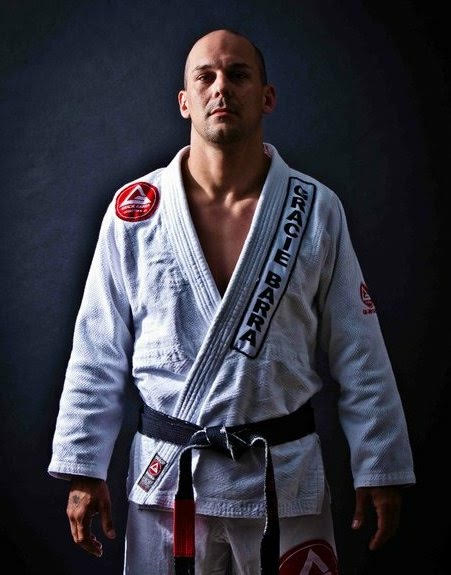
Co-Founder • NovaGenixTim’s Brazilian Jiu-Jitsu background includes training, teaching and competition. His writing for MA Success and BJJ Weekly reflects a longstanding connection to the martial arts community.

Andy Stock
Co-Founder • NovaGenixAndy began training at Four Seasons MMA in Lexington, Kentucky, before moving to South Florida. His friendship with Tim through BJJ helped inspire NovaGenix.
Tim Bruce and Andy Stock write from their experience as martial artists and clinic co-founders. Their biographies and personal perspectives do not substitute for medical evidence or individualized physician guidance.
Sources and further reading
- FDA: Compounding substances and potential safety risks
- Emerging Use of BPC-157 in Orthopaedic Sports Medicine: A Systematic Review
- WADA: Official Prohibited List and IBJJF anti-doping policy
- Tim Bruce: New Treatment for Injured Martial Artists — historical background, not current service or treatment guidance.
- Tim Bruce: Mental Toughness in BJJ



