TRT and Male Fertility: Preserving Sperm Production and Testicular Function
Testosterone replacement therapy can improve symptoms in appropriately diagnosed men, but it can also suppress the hormonal signals required for sperm production. If having children now or in the future matters to you, fertility should be discussed before testosterone is started—not after a low sperm count is discovered.
The right plan depends on your timeline, baseline fertility, cause of low testosterone, current treatment, and whether your goal is to preserve sperm, maintain testicular size, treat low-T symptoms, or actively conceive.
A consultation and appropriate testing are required. No treatment can guarantee fertility or pregnancy. Eligible Florida patients may use physician-directed online TRT care when telemedicine is clinically appropriate.
Medically reviewed by Timothy Mackey, D.O., Medical Director, NovaGenix Health & Wellness
Last reviewed: August 25, 2026

On this page
Page contentsKey takeaways
TRT can suppress sperm production
A normal blood testosterone level while using TRT does not prove that sperm production is intact.
TRT is not birth control
Reduced sperm production is not the same as sterility. Continue contraception if pregnancy is not desired.
Your timeline shapes treatment
Trying now requires a different plan from possibly wanting children years from now.
Planning preserves options
Baseline semen testing, sperm banking, alternatives to testosterone, or specialist care may be appropriate.
Clinical note: Do not stop testosterone or begin hCG, clomiphene, enclomiphene, or another hormone-active medication without physician guidance.
Quick answers
Does TRT affect fertility?
Yes. External testosterone can reduce LH and FSH, lower testosterone inside the testicles, and sharply reduce sperm production.
Does TRT make every man sterile?
No. Suppressed fertility is not guaranteed sterility, and TRT is not reliable contraception.
Can hCG guarantee fertility?
No. It may support testicular activity in selected men but cannot guarantee sperm preservation, conception, or live birth.
Is shrinkage infertility?
No. Size alone cannot determine fertility. A semen analysis is needed.
Can fertility return?
Often, but recovery may take months or longer and cannot be promised on a fixed schedule.
Why can testosterone lower sperm count?
The hypothalamic-pituitary-gonadal axis regulates reproductive hormones. External testosterone tells the brain that enough testosterone is available, so LH and FSH signaling may fall substantially. Testosterone inside the testicles then drops—even when serum testosterone is normal or high.
Hypothalamus + pituitary
Reproductive signals
Testosterone + sperm
What may happen on testosterone-only therapy?
- Sperm concentration may decline or azoospermia may occur.
- Testicular volume may decrease.
- Ejaculate volume or testicular fullness may change.
- Natural testosterone production may remain suppressed during treatment.
Fertility, testicular function, and testicular size are not identical
| Goal | What it means | How it is assessed |
|---|---|---|
| Preserve testicular size | Limit or reverse volume loss | History, examination; sometimes ultrasound |
| Preserve hormone production | Maintain activity inside the testicles | Hormone testing and clinical response |
| Preserve sperm production | Maintain sperm in the ejaculate | Semen analysis |
| Preserve ability to conceive | Retain a reasonable chance of pregnancy | Both partners’ reproductive factors |
| Preserve a future option | Store sperm before suppression | Sperm cryopreservation |
A medication may help one endpoint without guaranteeing the others. Maintaining size does not prove normal sperm production, and maintaining some sperm does not guarantee pregnancy.
Choose the section that fits your situation
1. Not on TRT; children later
Confirm the diagnosis and cause, discuss baseline semen analysis, sperm banking, fertility-preserving alternatives, and whether referral is warranted.
2. On TRT; future fertility
Review treatment history, obtain semen testing, discuss physician-directed options, bank usable sperm, and refer if markedly abnormal.
3. Trying to conceive soon
Near-term family building is time-sensitive. Testosterone monotherapy is generally not appropriate; coordinated fertility care may be needed.
4. Very low or zero sperm
Repeat testing, hormonal evaluation, examination, medication changes, gonadotropin care, and reproductive-urology referral may be appropriate.
5. Size concern only
Testicular-size preservation is a valid but separate goal from fertility treatment and requires different counseling and monitoring.
Options a physician may discuss
Baseline semen analysis and sperm banking
A semen analysis documents sperm production before treatment. Cryopreservation is the most direct way to preserve a pre-treatment sample, though it cannot guarantee pregnancy.
Alternatives to exogenous testosterone
Regulatory context mattersSelected men with secondary hypogonadism may be evaluated for clomiphene or enclomiphene. Clomiphene is used off-label in men. Enclomiphene is not FDA-approved as a standalone U.S. drug.
hCG with or without testosterone
Selected uses are off-labelhCG acts at the LH receptor and may support intratesticular testosterone and testicular activity. It does not replace FSH in every situation or guarantee fertility.
Stopping testosterone and recovery
Men trying to conceive may need a supervised change. A clinician may consider hCG, a SERM, or other gonadotropin therapy while monitoring symptoms and semen results.
FSH-containing therapy and specialist care
Persistent severe oligospermia or azoospermia may require reproductive-urology management, additional testing, gonadotropins, or assisted-reproduction planning.
Some men come to NovaGenix for fertility reasons and others for symptoms such as low sex drive; a physician evaluation covers both.
What published research shows about fertility preservation
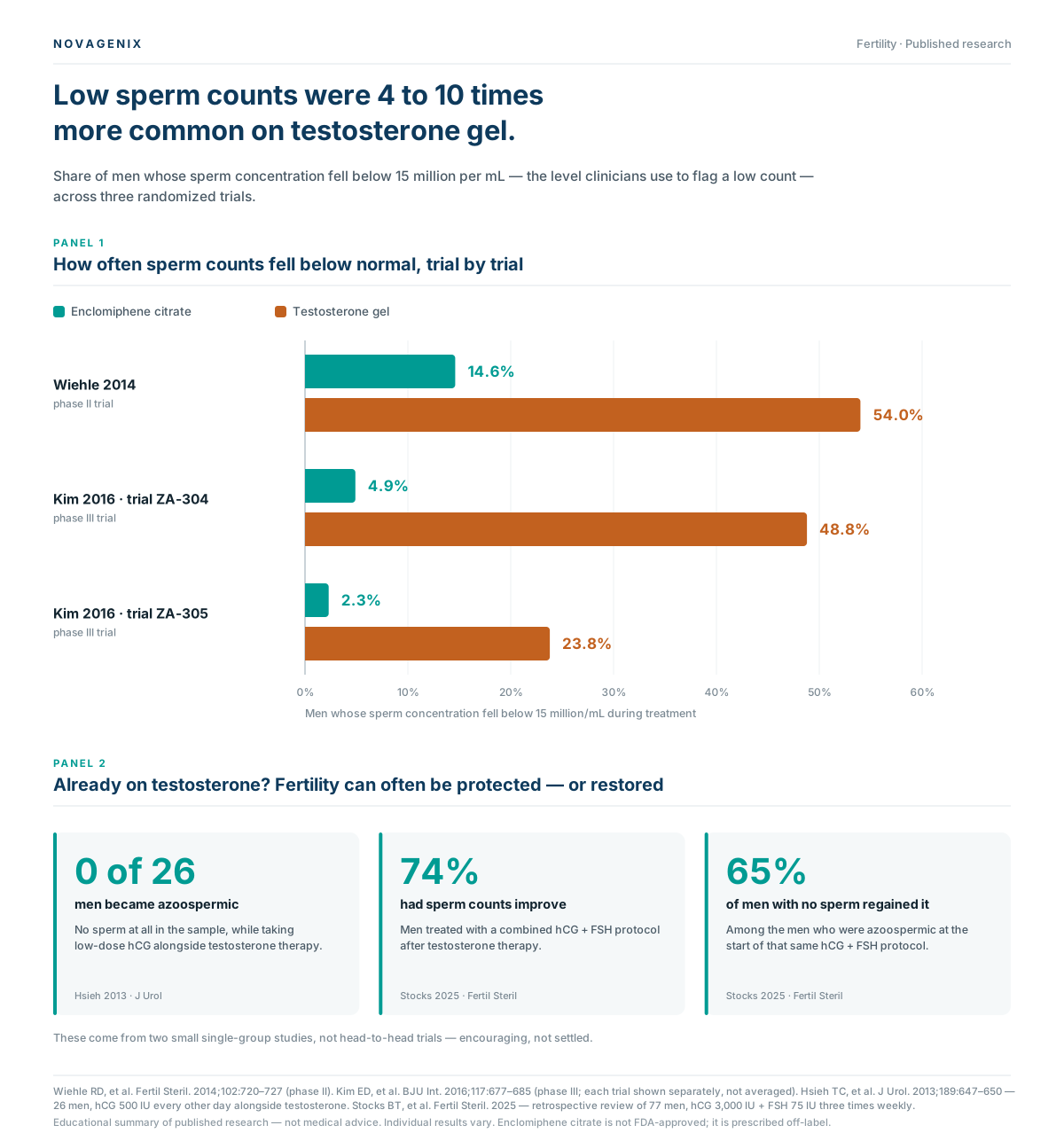
How to interpret this graphic: The enclomiphene findings come from randomized trials comparing it with testosterone gel. The hCG and hCG-plus-FSH findings come from small observational studies. These results are encouraging but do not guarantee maintained sperm production, fertility recovery, conception, or pregnancy.
Sources: Kim ED et al., BJU Int 2016 · Wiehle RD et al., Fertil Steril 2014 · Hsieh TC et al., J Urol 2013 (via Crosnoe et al. review) · Stocks BT et al., Fertil Steril 2025
What does the evidence say about hCG during TRT?
Randomized hormone study
In 29 healthy men with testosterone-suppressed gonadotropins, low-dose hCG maintained intratesticular testosterone in a dose-responsive manner over three weeks. It was not a long-term fertility or pregnancy trial.
Small retrospective series
In 26 hypogonadal men receiving testosterone plus hCG, semen parameters were maintained and no participant became azoospermic during follow-up; nine contributed to a pregnancy. The study was small and nonrandomized.
Responsible conclusion: hCG may help preserve the testicular environment and semen parameters in selected men on TRT. The evidence is encouraging but cannot support a promise of fertility preservation.
Can sperm production recover after stopping TRT?
Recovery is common but not immediate or identical for every man.
Testing before and during fertility-focused care
Semen analysis
The central test for sperm production, including volume, concentration, total count, motility, and morphology. Abnormal results may need repeating.
Hormonal evaluation
May include total and free testosterone, LH, FSH, estradiol, prolactin, thyroid testing, and standard safety monitoring.
History and examination
Prior fertility, injury, surgery, undescended testicle, varicocele, infection, steroids, chemotherapy, medication, sexual function, and both partners’ reproductive health matter.
Blood tests cannot substitute for a semen analysis, and a semen analysis cannot explain every cause of infertility by itself.
When should you see a reproductive urologist?
- You are actively trying to conceive while using testosterone.
- No sperm or very few sperm are detected.
- Fertility problems existed before TRT.
- There is pain, a lump, marked asymmetry, or another examination concern.
- You have a history of undescended testicle, injury, cancer treatment, genetic condition, or varicocele.
- Your partner’s reproductive timeline makes delay important.
- Sperm production does not recover as expected.
New pain, swelling, or a testicular mass warrants prompt medical evaluation.
How NovaGenix approaches TRT and fertility concerns
NovaGenix provides physician-led hormone evaluation and treatment for adult men in Florida. Fertility goals are part of treatment selection—not an afterthought.
For the wider diagnosis, safety, treatment, and follow-up discussion, read the questions men ask before starting TRT.
1. Confirm and review
Timothy Mackey, D.O., reviews diagnosis, treatment history, fertility goals, semen results, and relevant hormone and safety labs.
2. Discuss options
Depending on the patient, the discussion may include hCG, clomiphene, enclomiphene, changing testosterone therapy, or referral.
3. Coordinate care
NovaGenix may recommend a reproductive urologist or fertility specialist when needs go beyond routine hormone management.
Patients at our Low T clinic serving West Palm Beach and across Palm Beach County can complete laboratory work close to home while care is coordinated from Jupiter.
What to bring
Medication list, hormone labs, semen reports, treatment dates and doses, fertility history, and your family-building timeline.
NovaGenix does not perform semen analysis and does not guarantee sperm preservation, recovery, conception, or pregnancy.
Frequently asked questions
Can I get my partner pregnant while taking testosterone?
Yes. TRT may sharply reduce sperm production but does not make every man sterile and should never be used as contraception.
Should I get a semen analysis before starting TRT?
If current or future fertility matters, a baseline analysis is worth discussing because it documents production before treatment.
Should I freeze sperm before TRT?
Sperm banking is the most direct way to preserve a pre-treatment sample for possible future use.
Does hCG keep you fertile on TRT?
It may help in selected men but cannot guarantee fertility. Semen analysis is needed to assess sperm production.
Does hCG prevent testicular shrinkage?
It may help preserve or restore activity and volume in selected men. Size alone does not prove fertility.
Is hCG FDA-approved for fertility preservation with TRT?
No hCG product is specifically approved as a routine TRT add-on for fertility preservation. Certain products are approved for selected male hypogonadotropic hypogonadism; use alongside TRT for fertility or size goals is off-label.
Is enclomiphene the same as Clomid?
No. Clomiphene contains two isomers; enclomiphene is the trans-isomer. Neither is FDA-approved for male hypogonadism or infertility, and enclomiphene is not an approved standalone U.S. drug.
Can enclomiphene or Clomid be added to TRT?
They are more often considered as alternatives in responsive men with secondary hypogonadism and are not automatic TRT add-ons.
How long after stopping TRT does sperm return?
Often several months, sometimes a year or longer. No individual date can be guaranteed.
Does switching from injections to cream protect fertility?
No. Injections, gels, creams, pellets, and oral testosterone can all suppress the reproductive axis.
Will lower-dose testosterone preserve fertility?
A lower dose does not guarantee maintained sperm production.
Does NovaGenix perform semen analysis?
No. NovaGenix can review outside results and may recommend specialist evaluation.
Is testicular shrinkage dangerous?
It commonly reflects reduced LH and FSH signaling, but new pain, swelling, a lump, or marked asymmetry should be evaluated promptly.
Can I stop TRT on my own if I want a baby?
No. Stopping can cause symptoms to return, and recovery should follow a physician-directed plan with semen testing.
Medical references
- AUA/ASRM Guideline: Diagnosis and Treatment of Infertility in Men
- Endocrine Society Testosterone Therapy Guideline
- ASRM: Testosterone Use and Male Infertility
- Coviello et al. Low-dose hCG and intratesticular testosterone
- Hsieh et al. Concomitant hCG and spermatogenesis
- McBride & Coward. Recovery of spermatogenesis
- DailyMed: Pregnyl labeling
- FDA discussion of enclomiphene regulatory history
Related NovaGenix resources: testosterone replacement therapy for men, hCG therapy for men on TRT, hCG vs. Clomid or enclomiphene, and low testosterone evaluation.
Your fertility timeline should shape your testosterone plan.
Whether you are considering TRT, already in treatment, or responding to an abnormal semen analysis, start with a physician-led review of your goals and medical history.
Eligible Florida patients may be evaluated by telemedicine. Testing and outside specialist care may be required.


.png)
