BPC-157
This 15-amino-acid synthetic peptide has shown tissue-repair signals mainly in laboratory and animal studies. Adequately powered human trials are missing.

Connect with us


.png)

Schedule a Consultation!
The “Wolverine stack” is the informal name for a combination of two synthetic peptides, BPC-157 and TB-500, used together in the hope of speeding soft-tissue recovery. The name comes from the comic-book character, not from any medical body, and it is not a recognized clinical protocol. As of September 2026, neither compound is FDA-approved for any indication. Unverified peptide products can carry additional identity, purity and sterility risks. Medical supervision does not eliminate the uncertainties or risks of unapproved treatment. Athletes with acute soft-tissue injuries, patients recovering from cosmetic surgery, active adults with chronic joint pain, and people healing after orthopedic surgery are all looking for faster recovery. The question is whether the Wolverine Stack is both safe and effective.
A consultation does not guarantee a prescription. Availability depends on current law, sourcing, and clinical appropriateness.
Timothy Mackey, D.O.
Physician-led evaluation and monitoring
The Wolverine Stack combines BPC-157 and TB-500, usually by injection, based on the idea that their proposed pathways may complement one another. That rationale has not been demonstrated in human clinical trials. There is no recognized standard dose, cycle length, or clinical protocol.
This 15-amino-acid synthetic peptide has shown tissue-repair signals mainly in laboratory and animal studies. Adequately powered human trials are missing.
This synthetic thymosin beta-4 fragment is promoted for systemic recovery, but evidence from studies of the full protein does not automatically transfer to TB-500 products.
Neither compound is FDA-approved. Human effectiveness, dosing, product consistency, and long-term safety remain uncertain.
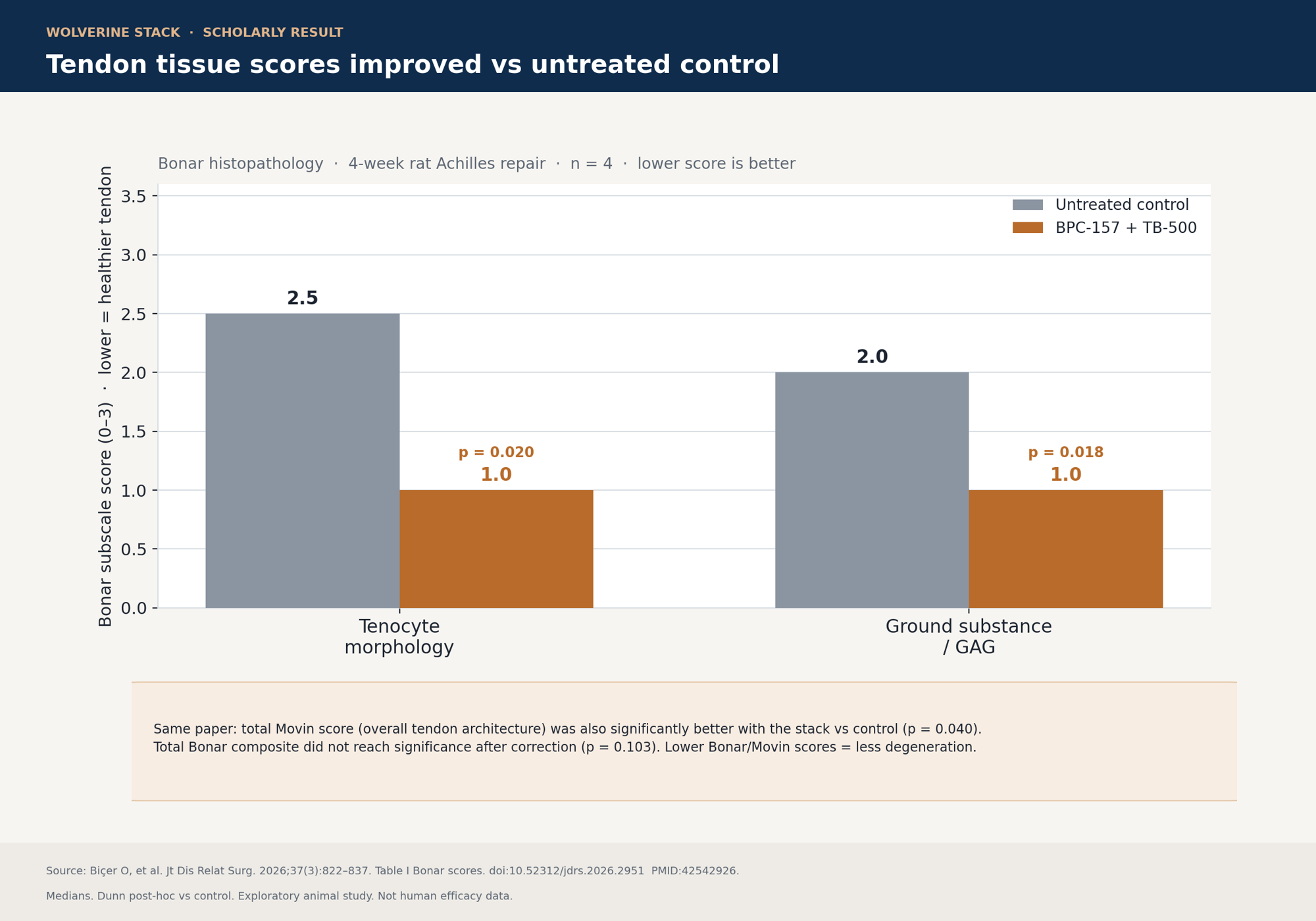
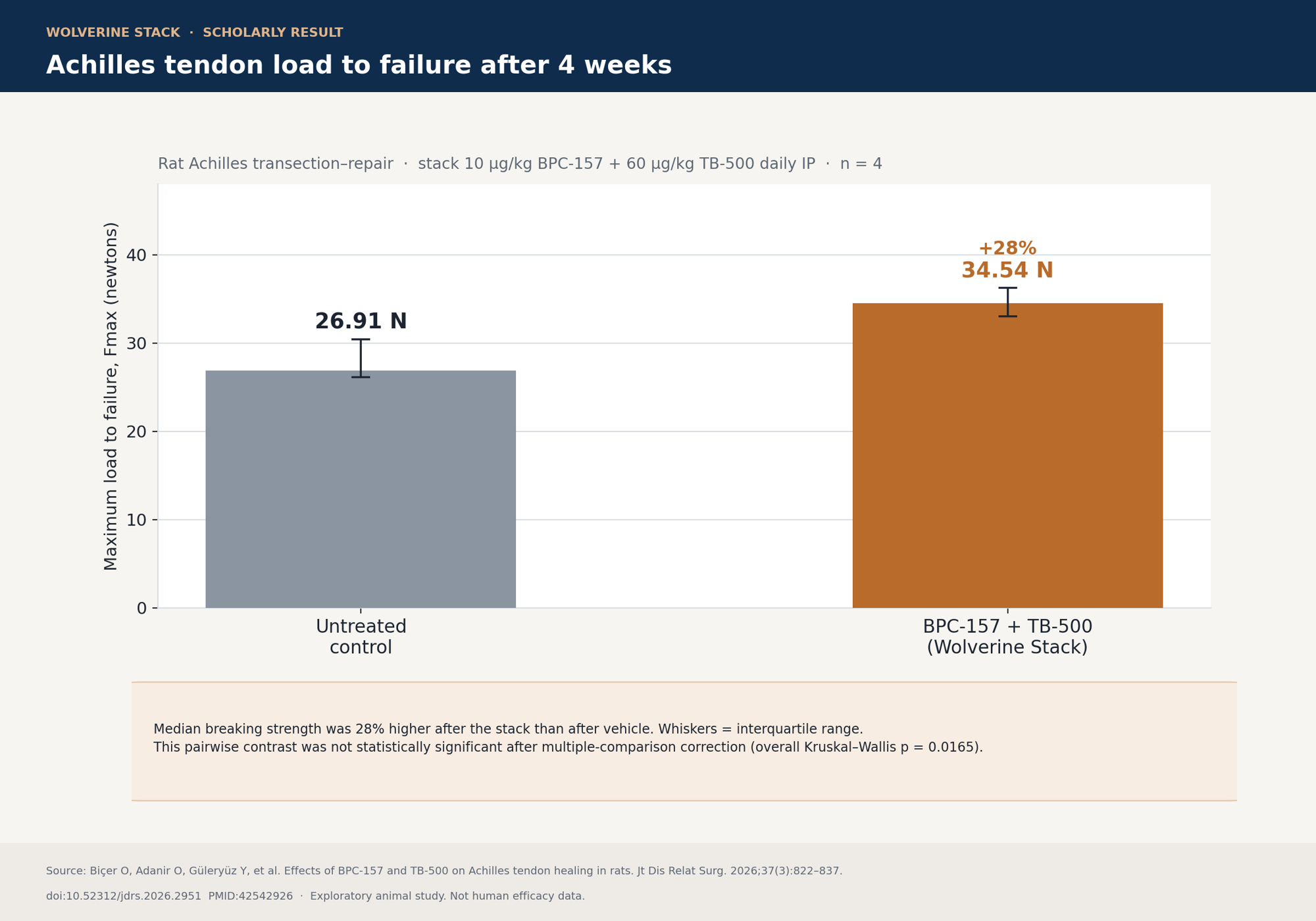
A 2026 exploratory rat Achilles-repair study compared BPC-157, TB-500, their combination, and control at four weeks. Only TB-500 versus control reached statistical significance after correction. The combination did not outperform either peptide used alone. This animal study does not establish effectiveness or safety in people.
They are frequently discussed together online, sometimes as the “Wolverine Stack,” but they are different experimental peptides with different proposed pathways and evidence bases.
| Question | TB-500 | BPC-157 |
|---|---|---|
| What is it? | Synthetic fragment modeled on thymosin beta-4 | Synthetic peptide derived from a gastric protein sequence |
| Human injury evidence | Very limited | Limited; most evidence remains preclinical |
| FDA-approved? | No | No |
| Competitive sport | Anti-doping restrictions may apply | Listed by WADA as a non-approved substance |
Do not buy injectable peptides from social media, overseas sellers, or websites marked “research use only.” Call 911 for an emergency and contact a clinician promptly for concerning symptoms.
Review symptoms, imaging, training load, medications, health history, and prior rehabilitation.
Discuss established treatments, supportive care, and investigational options without overstating certainty.
When treatment is appropriate and lawfully available, define monitoring, stop criteria, and next steps.
Research and educational review only. Preclinical findings do not establish that BPC-157, TB-500, or their combination safely or effectively treats injury in people.
No. Neither BPC-157 nor TB-500 is FDA-approved for any indication.
That claim has not been established in robust human trials. Preclinical findings are not proof of clinical benefit.
NovaGenix offers the Wolverine Stack, combining BPC-157 and TB-500, when clinically appropriate. A physician reviews the individual concern, evidence, risks, and current lawful pharmacy supply. A consultation does not guarantee a prescription.
Athletes should assume anti-doping rules may apply and verify the current WADA list and their sport’s policies.
If an injury is not resolving or recovery has slowed, start with a diagnosis and a physician-led review—not an online protocol.
Learn what you want to know about hormone therapy by scheduling a free consultation.
Contact Us Today
609 N Hepburn Ave Ste 106, Jupiter, FL 33458

Monday - Friday: 9:00 am - 5:00 pm | Saturday-Sunday: Closed
