
Connect with us


.png)

Schedule a Consultation!
Does Vitamin D Raise Testosterone? What the Randomized Trials Actually Show
Short answer
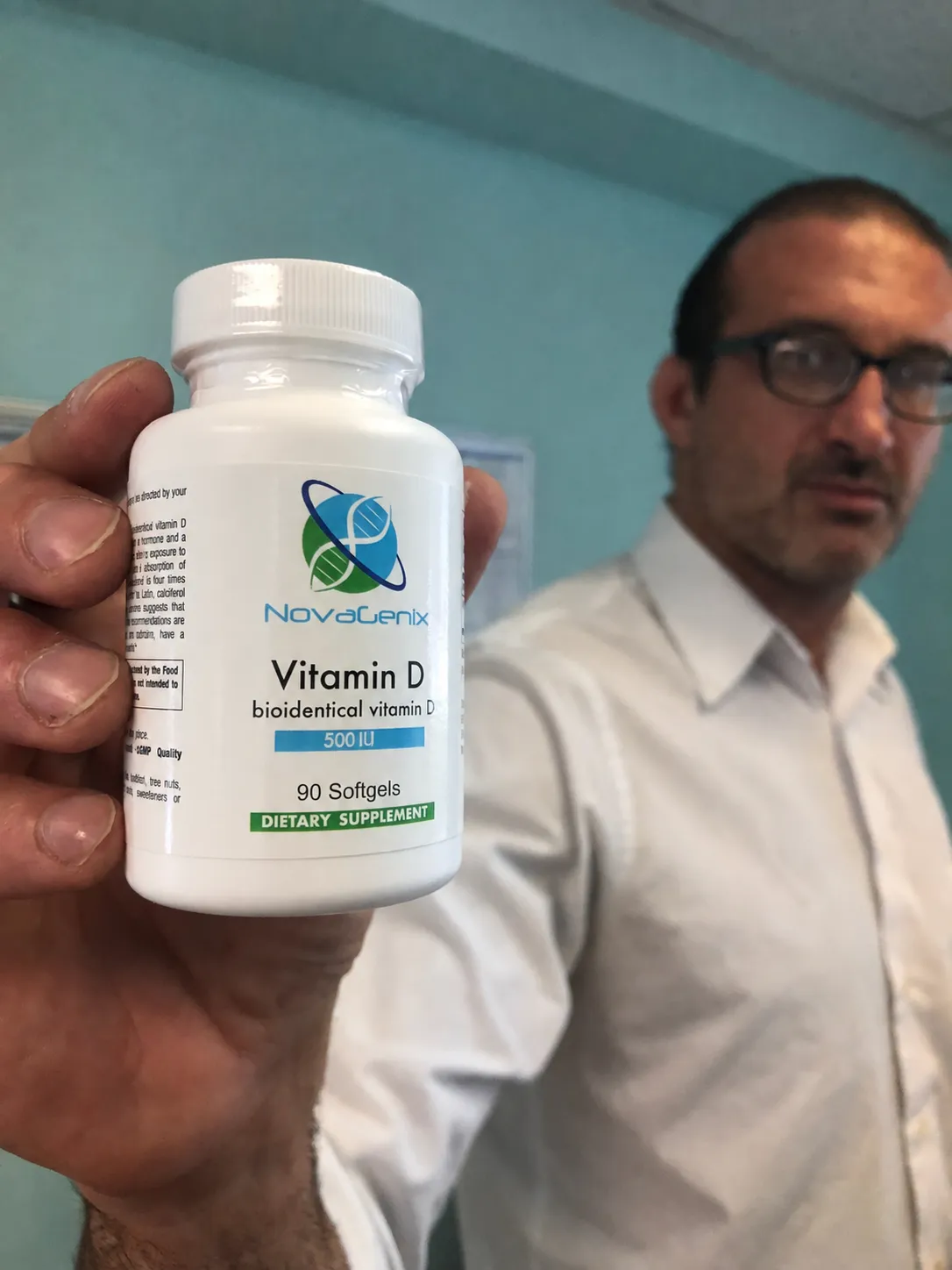
Probably not. Pooled randomized trial evidence published in 2026 found no clear effect of vitamin D supplementation on testosterone in adult men — including in men who were deficient. Vitamin D is worth correcting if your level is low, because vitamin D matters for bone and general health. But it is not a treatment for low testosterone, and no trial has shown it can substitute for a proper evaluation. If you have symptoms, the next step is two early-morning testosterone tests, not a supplement.
Key takeaways
- The most-cited "vitamin D boosts testosterone by 25%" study is a 2011 trial of 54 men who were also losing weight — and weight loss on its own raises testosterone.
- A 2026 systematic review and meta-analysis of randomized trials found no statistically significant effect on total testosterone (mean difference +0.47 nmol/L, 95% CI −0.50 to 1.44).
- The best dedicated randomized trial in men, published in 2017, found no effect on testosterone.
- The Endocrine Society's 2024 guideline retired the old "30 ng/mL is sufficient" target and no longer recommends routine vitamin D screening.
- Hypogonadism is typically diagnosed with two early-morning testosterone measurements plus symptoms — not with a vitamin D level, and not with a single lab draw.
Why so many articles say vitamin D raises testosterone
Almost every article you will find on this topic cites the same study.
In 2011, researchers in Austria published a trial in Hormone and Metabolic Research. Fifty-four men took either 3,332 IU of vitamin D3 daily or a placebo for one year. In the vitamin D group, total testosterone rose from 10.7 to 13.4 nmol/L — roughly 25%. Free and bioactive testosterone rose as well. The placebo group did not change.
That is a real result, correctly reported. The problem is what gets left out.
Those 54 men were participants in a weight-reduction program. Losing weight independently raises total testosterone in overweight men — this is one of the most consistent findings in the field. The testosterone analysis was not what the trial was designed to test; it was a secondary look at the male participants after the fact. And the published result is a within-group before-and-after change, not a head-to-head comparison showing that the vitamin D group beat the placebo group.
When the authors of the 2026 meta-analysis formally graded this trial, they rated it high risk of bias for its testosterone finding and excluded it entirely from their analysis of trials with strong co-interventions.
The study's own authors were careful. Their conclusion was that vitamin D supplementation "might increase testosterone levels" and that "further randomized controlled trials are warranted to confirm this finding."
Those trials have now been done.
What the randomized evidence actually shows
The 2026 meta-analysis found no effect
In June 2026, a systematic review and meta-analysis in Nutrients pooled the randomized controlled trials on this question — 27 reports in the qualitative synthesis, 21 comparison-level records, 11 comparisons in the primary analysis. It was pre-registered with PROSPERO and used standard Cochrane methods.
The result across every androgen measure, reported as mean difference with 95% confidence interval:
- Total testosterone: +0.47 nmol/L (−0.50 to 1.44)
- SHBG: +0.27 nmol/L (−2.14 to 2.68)
- Free androgen index: −0.37 (−4.28 to 3.55)
- Calculated free testosterone: −0.0096 nmol/L (−0.0525 to 0.0332)
- Bioactive testosterone: −0.47 nmol/L (−1.77 to 0.83)
Every confidence interval crosses zero. The authors' conclusion: "Current randomized evidence does not demonstrate a statistically clear or reproducible effect of vitamin D supplementation on total testosterone or androgen bioavailability markers in adult men."
The point estimate for total testosterone — +0.47 nmol/L — works out to roughly 14 ng/dL. Even at the most optimistic end of the confidence interval, around 41 ng/dL, that is well inside normal day-to-day variation for a single man.
No subgroup rescued the finding. The authors looked specifically at deficient men and at men with low baseline testosterone and did not find a benefit in either group.
The dedicated trial in men was negative
The 2011 study was a side analysis. In 2017, the Journal of Clinical Endocrinology & Metabolism published a trial designed from the start to answer this question: 98 men, randomized, double-blind, placebo-controlled, 20,000 IU of vitamin D3 weekly for 12 weeks, testosterone measured by mass spectrometry.
There was no significant effect on total testosterone. The median change in the treatment group was +0.5 nmol/L (P = 0.497).
The trial also turned up something the supplement articles never mention: a significant worsening of insulin sensitivity in the vitamin D group (QUICKI, P = 0.034).
One caveat that cuts the other way, and we will state it plainly: the men in that trial had normal baseline testosterone and were only moderately low on vitamin D. It does not fully settle the question for a man who is both frankly deficient and genuinely hypogonadal. The 2026 meta-analysis authors identified exactly that group as the remaining evidence gap — meaning it is understudied, not that a benefit has been demonstrated there.
So why do observational studies keep finding a link?
Because the link is real. It is the direction that is the problem.
Men with low vitamin D do, on average, have lower testosterone. That shows up repeatedly in cross-sectional data. But the same things that drive vitamin D down also drive testosterone down: excess body fat, sedentary behavior, poor sleep, chronic illness, age, and limited time outdoors. Body fat in particular sequesters vitamin D and independently suppresses testosterone.
A 2023 systematic review in Cureus looked at eight studies and found the association itself inconsistent — some found a positive correlation, some found none — and described the supplementation evidence as "inconclusive."
A 2020 critical review in Clinical Therapeutics put it in its title: "Mechanistically Dazzling but Clinically Disappointing."
The mechanism is real. That is what makes this so persuasive.
The biology is genuinely elegant, which is why this idea has been so hard to kill.
Vitamin D is not really a vitamin. It behaves as a steroid hormone. Leydig cells — the cells in the testes that produce testosterone — carry vitamin D receptors, and vitamin D influences the expression of enzymes involved in steroid synthesis. On paper, the pathway from vitamin D to testosterone production is straightforward.
A plausible mechanism is not a clinical effect. It is a reason to run the trial. The trials were run, and they came back null.
This is a pattern worth recognizing, because it will come up again with the next supplement. A mechanism tells you something is possible. A randomized trial tells you whether it actually happens in people. It is the same reason we are cautious about testosterone boosters generally.
So what is vitamin D actually good for?
A fair question at this point, and the answer is: quite a lot — just not this. It is worth separating what vitamin D reliably does from what it has been claimed to do, because the gap between those two is the entire story of this nutrient.
What is well established
Vitamin D's core job is not in dispute. It drives calcium absorption in the gut and maintains the serum calcium and phosphate levels that normal bone mineralization depends on. Without enough of it, bone does not mineralize properly — rickets in children, osteomalacia in adults. The NIH Office of Dietary Supplements also describes it as necessary for the normal development and growth of muscle fibers, and as a modulator of immune function and glucose metabolism.
Severe deficiency produces a real and recognizable clinical picture, including a proximal muscle weakness that improves once the deficiency is corrected. None of that is controversial, and it is reason enough to fix a low level on its own merits.
What has not held up
What has not survived testing is the broader claim — that giving more vitamin D to people who are not deficient prevents disease. The NIH's summary of the randomized evidence is consistent across categories:
- Cancer — trials have generally failed to show that supplementation reduces cancer incidence
- Cardiovascular disease — trials provide little support that supplemental vitamin D reduces cardiovascular disease or cardiovascular mortality
- Type 2 diabetes — little evidence that it improves glucose control or slows progression from prediabetes
- Depression — the observational association is there; the clinical trials do not support it
- Respiratory infection — a 2021 meta-analysis found a small protective effect, and it is the finding most often quoted. The same research group's 2025 update, covering 46 trials and 64,086 participants, produced a nearly identical point estimate that was no longer statistically significant (odds ratio 0.94, 95% CI 0.88–1.00)
The pattern should look familiar, because it is the one this page has been describing throughout: compelling biology, a strong observational signal, and randomized trials that come back flat.
The most economical explanation is that a low vitamin D level is frequently a marker of poor health rather than a cause of it. Illness, inactivity, excess body fat and time spent indoors all push it down. Correcting the marker does not correct what produced it — which is precisely the trap the testosterone claim falls into.
So the honest version is narrow, and worth stating plainly: if your level is low, correct it, and expect the benefit to land on your bones and muscles. It is not a general-purpose upgrade, and it is not a hormone treatment.
What your vitamin D number actually means in 2026
This is where most articles are out of date, including several that rank on the first page.
For years, the standard framing came from the Endocrine Society's 2011 guideline: deficiency below 20 ng/mL, insufficiency 21–29 ng/mL, sufficiency 30 ng/mL and above. That is where the popular "get to 40–60 ng/mL" advice came from.
The Endocrine Society replaced that guideline in 2024. The current guideline declines to define vitamin D thresholds at all, states that levels providing outcome-specific benefits "have not been established in clinical trials," no longer endorses the 30 ng/mL target, and advises against routine vitamin D screening in the general population. The Society issued a correction specifically to stop people citing the retired 2011 numbers as current.
What remains is the framework from the Institute of Medicine, reflected by the NIH Office of Dietary Supplements:
- Below 12 ng/mL — associated with vitamin D deficiency and, over time, osteomalacia in adults
- 12 to under 20 ng/mL — generally considered inadequate for bone and overall health
- 20 ng/mL and above — generally considered adequate for bone and overall health
- Above 50 ng/mL — linked to potential adverse effects, particularly above 60 ng/mL
Note what is not on that list: any "optimal for testosterone" range. No trial has established one.
How much is too much?
The NIH tolerable upper intake level for adults is 4,000 IU per day. That is the ceiling for unsupervised intake.
Vitamin D toxicity is real and it is not benign. It presents as hypercalcemia — nausea, vomiting, muscle weakness, excessive thirst and urination, confusion, kidney stones — and in severe cases as kidney failure, soft-tissue calcification, and cardiac arrhythmia.
You will see it written that toxicity is "unlikely below 10,000 IU per day." That is accurate, and it is also routinely misused. A toxicity threshold is not a dosing recommendation. The distance between "this probably will not poison you" and "this is an appropriate dose" is the entire point of medical supervision.
If you are taking more than 4,000 IU daily, that should be a decision made with a physician who is checking your level, not a decision made from an article.
If you have low-T symptoms, here is the order of operations
Fatigue, low libido, low mood, poor recovery, and loss of drive are the symptoms that send most men searching for vitamin D in the first place. They are also the symptoms of low testosterone, poor sleep, depression, thyroid disease, and about a dozen other things. Those overlapping causes are worth understanding before you start treating anything.
That overlap is exactly why guessing is the wrong move.
Step one — get measured, correctly
Both major guidelines agree on how hypogonadism is diagnosed, and neither allows for a shortcut:
- Two total testosterone measurements, on separate days, drawn early in the morning — the Endocrine Society specifies fasting
- Plus symptoms or clinical signs. A low number by itself is not a diagnosis
- The American Urological Association uses a total testosterone below 300 ng/dL as a reasonable diagnostic cut-off
- The Endocrine Society defers to the local laboratory's reference range, citing the CDC-harmonized lower limit of 264 ng/dL for healthy young men
Why those last two numbers disagree — and why it matters
Read those two bullets again, because the gap between them is real and a man can land squarely inside it. At 280 ng/dL you are below the AUA's cut-off and above the Endocrine Society's. Same blood draw, same number on the page, two different answers depending on which guideline the physician in front of you follows.
Neither organization is wrong. They reviewed the same literature and drew the line in different places, for defensible reasons. But this is one of the genuinely difficult parts of testosterone medicine, and it is not the patient's fault that it is confusing.
The absence of a single standard has practical consequences. It affects whether a laboratory flags your result at all, how a physician interprets it, and whether an insurer considers you a candidate for treatment. It is a common reason a man is told he is "normal" at one office and "low" at another, with nothing about him having changed. Navigating that — particularly on the coverage side — is frequently harder than the medicine itself.
Which is why who reads your labs matters more than which threshold they happen to use. A clinician who understands the reasoning behind the difference can weigh your total testosterone against your free testosterone, your symptoms and your history, rather than treating one number as a verdict in either direction.
A single afternoon draw does not meet this standard, and neither does an online questionnaire. Our low testosterone testing page explains how we handle the draw and what the panel covers, and what your testosterone level should be goes deeper on interpreting the number.
Step two — do not treat a number you have not seen
If you have not had your vitamin D measured, you do not know whether you are deficient. Most men taking D3 for testosterone have never checked. If your level is already adequate, the randomized evidence says additional vitamin D will not move your testosterone — and you are past the point of any expected benefit.
Step three — separate the two questions
They are not the same question, and conflating them is the mistake this entire article exists to correct:
- If your vitamin D is low, correcting it is reasonable medicine — for bone health, muscle function, and general health. Do that because low is worth fixing, not because you expect a testosterone result.
- If your testosterone is genuinely low on two morning draws and your symptoms fit, vitamin D is not the treatment. Correcting it is supportive care alongside a proper evaluation, not a substitute for one. Physician-led testosterone replacement therapy is a different conversation, and a clinical one.
Both can be true at the same time. Many men are low in both, and fixing one does not fix the other.
What about men already on testosterone therapy?
This is the one place the vitamin D conversation gets more interesting, and we want to be careful about how strongly we put it.
A 2025 prospective study from the Medical University of Silesia followed 65 men with late-onset hypogonadism through six months of testosterone therapy, grouped by vitamin D status. Men who were vitamin D–sufficient, or who had been supplemented into sufficiency, showed improvements across cardiometabolic markers — insulin resistance, LDL cholesterol, hsCRP, homocysteine, fibrinogen, and calculated cardiovascular risk. Men in the lowest vitamin D group improved far less, and their HDL cholesterol fell.
The honest framing of that study:
- It was not randomized. It was a matched cohort, which means selection and confounding cannot be excluded.
- It followed 65 men for six months using surrogate markers, not clinical outcomes like heart attacks.
- The authors' own conclusion used the word "may": cardiometabolic effects of testosterone "may be determined by vitamin D status."
- No randomized trial has tested whether correcting vitamin D improves testosterone therapy outcomes.
So this is a reason to know your vitamin D level if you are on testosterone therapy. It is not evidence that therapy will fail without it, and any page telling you that is overstating what exists.
How we handle this at NovaGenix
We are a physician-led clinic in Jupiter, Florida. Dr. Timothy Mackey evaluates every patient in person, and we do not prescribe testosterone on the basis of an online form.
The workup:
- A free consultation to talk through symptoms, history, and whether testing makes sense for you
- Laboratory testing — our initial $125 male hormone panel covers total and free testosterone, sensitive estradiol, PSA, and hematocrit, and includes a lab review or consultation with Dr. Mackey. Depending on your results and history, he may add LH, FSH, SHBG, or other tests. Laboratory testing is billed separately from the TRT program
- Vitamin D (25-OH) is available as an add-on. It is not part of the initial panel that every patient receives, because routine vitamin D screening is not recommended for asymptomatic adults. If you want it checked, or if your history suggests it is worth checking, we are happy to add it
- An in-person evaluation with Dr. Mackey, and a plan built from your labs and your symptoms — which may or may not include testosterone therapy
What we will not do is sell you a supplement and call it treatment.
Frequently asked questions
Does vitamin D increase testosterone?
Pooled randomized trial evidence says no. A 2026 systematic review and meta-analysis found no statistically significant effect of vitamin D supplementation on total testosterone in adult men, with a mean difference of +0.47 nmol/L and a confidence interval that includes zero. Observational studies do show that men with low vitamin D tend to have lower testosterone, but that association is heavily influenced by shared causes such as excess body fat, poor sleep, and inactivity.
How long does it take for vitamin D to raise testosterone?
The most-cited study ran for 12 months, and the best dedicated randomized trial ran for 12 weeks and found no effect. Since the pooled randomized evidence does not show a reliable effect at any duration studied, there is no supported timeframe to give. If your vitamin D is low, note that 25-OH vitamin D has a circulating half-life of about 15 days, so a level rechecked too soon after a dose change will not tell you where you are heading. Dr. Mackey will advise when to retest.
How much vitamin D should I take for testosterone?
There is no dose established to raise testosterone, because randomized trials have not shown that vitamin D raises testosterone. For general health, the NIH tolerable upper intake level for adults is 4,000 IU per day, and intakes above that should only be taken under medical supervision with monitoring of your level.
What happens if I take 5,000 IU of vitamin D3 every day?
That exceeds the NIH tolerable upper intake level of 4,000 IU per day for adults. Many people take it without apparent harm, but it should be done with a physician monitoring your 25-OH vitamin D level. Sustained high intake can raise vitamin D above 50 ng/mL, where potential adverse effects begin, and toxicity becomes a genuine concern at serum levels above 150 ng/mL.
Can 10,000 IU or 60,000 IU of vitamin D3 increase testosterone?
There is no evidence that higher doses produce a testosterone benefit that lower doses do not, and the 2026 meta-analysis found no effect overall. Doses at that level carry real risk of hypercalcemia and should only be used under medical supervision, typically short-term to correct documented severe deficiency.
Can I take vitamin D instead of starting TRT?
No. If your testosterone is confirmed low on two early-morning tests and your symptoms fit, vitamin D is not a substitute for a proper evaluation and treatment. Correcting a documented vitamin D deficiency is worth doing on its own merits, but it has not been shown to treat hypogonadism.
Should men on testosterone therapy take vitamin D?
Knowing your vitamin D level is reasonable if you are on testosterone therapy. A 2025 non-randomized study of 65 men found that cardiometabolic improvements on therapy were smaller in men with the lowest vitamin D status. That study was small, was not randomized, and used surrogate markers, so it supports checking your level rather than any claim that therapy requires vitamin D to work.
Do zinc and vitamin D together boost testosterone?
Both are nutrients where a genuine deficiency can affect normal physiology, and correcting a documented deficiency may help restore normal function. Neither has been shown to push testosterone above a man's normal physiologic range when he is not deficient, and combining them does not change that.
Does vitamin D affect testosterone in women?
Research has examined vitamin D and androgen levels in women, particularly in the context of PCOS and reproductive health, but the evidence is limited and this article addresses testosterone in men. Women with hormone-related concerns should be evaluated individually.
Talk to a physician about your levels
If fatigue, low libido or loss of drive are what brought you here, the useful next step is measurement, not a supplement aisle. A free consultation with Dr. Mackey is the fastest way to find out what is actually driving your symptoms.
Call or text 561-277-8260 — NovaGenix Health & Wellness, 609 N Hepburn Ave Ste 106, Jupiter, FL 33458.
THE PATIENT AND ANY OTHER PERSON RESPONSIBLE FOR PAYMENT HAS A RIGHT TO REFUSE TO PAY, CANCEL PAYMENT, OR BE REIMBURSED FOR PAYMENT FOR ANY OTHER SERVICE, EXAMINATION, OR TREATMENT THAT IS PERFORMED AS A RESULT OF AND WITHIN 72 HOURS OF RESPONDING TO THE ADVERTISEMENT FOR THE FREE, DISCOUNTED FEE, OR REDUCED FEE SERVICE, EXAMINATION, OR TREATMENT.
Written by the NovaGenix Editorial Team · Medically reviewed by Timothy Mackey, D.O., Medical Director, Florida License OS9185 · Last medically reviewed: September 22, 2026
References
- Paez-Allendes L, et al. Vitamin D Supplementation, Total Testosterone, and Androgen Bioavailability Markers in Adult Men: A Systematic Review and Meta-Analysis of Randomized Controlled Trials. Nutrients. 2026;18(13):2090. mdpi.com
- Pilz S, et al. Effect of vitamin D supplementation on testosterone levels in men. Horm Metab Res. 2011;43(3):223–225. PubMed
- Lerchbaum E, et al. Vitamin D and Testosterone in Healthy Men: A Randomized Controlled Trial. J Clin Endocrinol Metab. 2017;102(11):4292–4302. JCEM
- Santos HO, et al. Reviewing the Evidence on Vitamin D Supplementation in the Management of Testosterone Status: Mechanistically Dazzling but Clinically Disappointing. Clin Ther. 2020;42(6):e101–e114. PubMed
- Monson NR, et al. Association Between Vitamin D Deficiency and Testosterone Levels in Adult Males: A Systematic Review. Cureus. 2023;15(9):e45856. PMC
- Krysiak R, et al. Vitamin D Status Determines Cardiometabolic Effects of Testosterone Replacement Therapy in Men with Late-Onset Hypogonadism. Nutrients. 2025;17(6):1013. PMC
- Demay MB, et al. Vitamin D for the Prevention of Disease: An Endocrine Society Clinical Practice Guideline. J Clin Endocrinol Metab. 2024. Endocrine Society
- National Institutes of Health, Office of Dietary Supplements. Vitamin D — Fact Sheet for Health Professionals. NIH ODS
- Bhasin S, et al. Testosterone Therapy in Men With Hypogonadism: An Endocrine Society Clinical Practice Guideline. J Clin Endocrinol Metab. 2018;103(5):1715–1744. JCEM
- Mulhall JP, et al. Evaluation and Management of Testosterone Deficiency: AUA Guideline. J Urol. 2018;200(2):423–432. AUA
- Jolliffe DA, et al. Vitamin D supplementation to prevent acute respiratory infections: systematic review and meta-analysis of stratified aggregate data. Lancet Diabetes Endocrinol. 2025;13(4):307–320. Lancet Diabetes & Endocrinology
- Jolliffe DA, et al. Vitamin D supplementation to prevent acute respiratory infections: a systematic review and meta-analysis of aggregate data from randomised controlled trials. Lancet Diabetes Endocrinol. 2021;9(5):276–292. Lancet Diabetes & Endocrinology
Questions about treatment options?
Speak with NovaGenix about physician-led evaluation, testing, and treatment options in Jupiter, Florida.
Medical disclaimer: This article is for general educational purposes only and is not medical advice, a diagnosis, or a treatment recommendation. Reading it does not create a physician-patient relationship. Always consult a qualified healthcare professional about your individual circumstances, and never delay seeking care because of something you read here. If you are experiencing a medical emergency, call 911. Read our full Medical Disclaimer.

Contact Us
Blood Work Request Form

609 N Hepburn avenue suite 106. Jupiter, Florida 33458

609 N Hepburn avenue suite 106. Jupiter, Florida 33458

561-277-8260

Schedule a Consultation
Learn what you want to know about hormone therapy by scheduling a free consultation.
Contact Us Today609 N Hepburn Ave Ste 106, Jupiter, FL 33458
Monday - Friday: 9:00 am - 5:00 pm | Saturday-Sunday: Closed